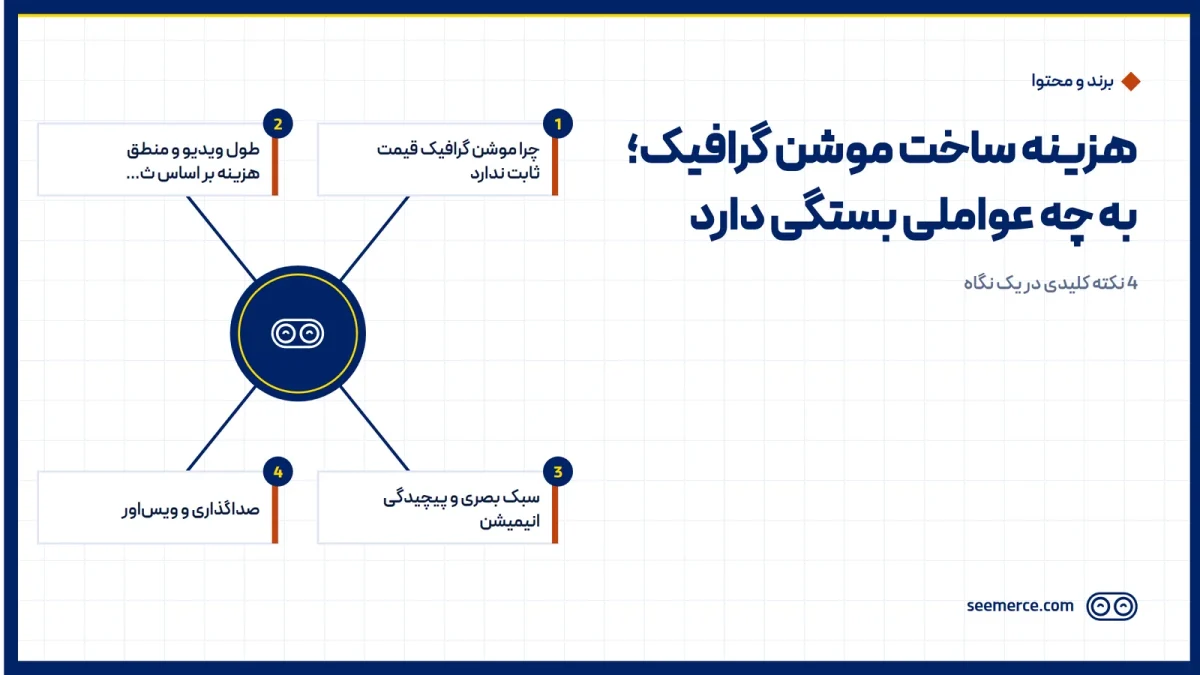
When you ask a couple of studios for a quote on the same motion graphic video, the numbers you get back can be surprisingly far apart. That's usually not random. Unlike a lot of other services, motion graphics doesn't have one fixed rate, because every second of finished video represents real hours of design and animation work behind it. In this post we'll break down where motion graphic cost actually comes from, which variables push the price up or down, and how to put together a brief that gets you a realistic quote.
Why motion graphics doesn't have a fixed price
A motion graphic video is built from several layers of work: writing the script, designing characters or visual elements, animating frame by frame, sound design, and final editing. Each layer takes time, and depending on the quality level you want, that time can multiply several times over. So when someone asks what a promotional animation costs, the honest answer is always another question: how many seconds, in what style, with how many revision rounds.
You really can't read the real number off a public price list, because the details that make one brief cheap and another expensive are exactly the things that aren't visible at first glance.
Video length and the per-second cost logic
The most common pricing model in this industry is based on the final seconds of video, not a flat project fee. The reason is simple: a well-made 30-second video can involve more animation work than a lower-quality 90-second one.
That doesn't mean cost scales perfectly linearly with length either. A few things matter here:
- The first few seconds of a video are usually the most expensive, because the visual style, color palette, and characters are designed once and then reused for the rest of the video.
- Very short videos (under 15 seconds) end up costing more per second, because the upfront design cost is spread over fewer seconds.
- Longer videos (over 90 seconds) usually get cheaper per second, since they reuse the same visual assets already built.
Visual style and animation complexity
This is probably the single biggest factor in motion graphic cost. A few common tiers:
- Flat 2D motion graphics: the simplest and most budget-friendly tier — simple shapes, icons, and text with standard movement.
- Character animation: requires character design, rigging, and more natural movement; production time is significantly higher.
- 3D or isometric: the most complex and time-consuming tier — modeling, lighting, and rendering take considerable time.
- Kinetic typography: usually sits in the middle cost-wise, since the focus is on text movement rather than characters or complex scenes.
One important note: a more expensive style isn't always the better choice. For a lot of simple promotional messages, clean flat 2D motion graphics get better results than a flashy but unnecessary 3D animation.
Voiceover and sound design
Sound is half the experience of a video, but it's often left out of cost estimates. Several separate pieces have their own costs:
- Professional voiceover (single or multiple languages) with a real narrator
- Background music with a commercially usable license
- Sound design synced with the visual movement
- Final audio and video mix
If budget is tight, you can start with good-quality stock music and a simple voiceover, and save custom sound design for a later version.
Number of revision rounds
This is one of the things a lot of clients don't budget for. Every revision round means extra time for the studio, whether it's on the script and storyboard or on the final animation. A reasonable number of revision rounds should be agreed on from the start; otherwise a project planned for two weeks can stretch to a month, and the real cost ends up higher than the original estimate.
Script, storyboard, and pre-production
Before a single frame gets animated, the script needs to be written, the core message needs to be clear, and the storyboard (scene-by-scene plan) needs to be approved. This stage sometimes gets skipped over, but it's exactly where the direction of the whole project gets decided. If your brand doesn't yet have a clear message and tone, it's worth working on that before ordering a motion graphic video — this is where the work overlaps with content writing and shaping the brand's message.
Turnaround time and rush fees
Projects that need to be delivered on a tight schedule usually cost more, because the studio has to put more resources on it at once — several animators instead of one, extra working hours. If there's no real rush, a normal timeline is always the cheaper option.
Localization into multiple languages
If the same video needs to run in different markets in different languages, there's added cost for translation, recording a new voiceover, and sometimes re-adjusting the typography (especially between Persian and English, which run in different text directions). The good news is that since the base visual design and animation are already built, extra language versions usually cost a lot less than building a completely new video.
Three common tiers, described qualitatively
Without giving an exact number that wouldn't hold up in practice, here's a qualitative description of three common tiers:
- Entry tier: flat 2D motion graphics, short video, simple or stock voiceover, one or two revision rounds. Good for a quick product or service introduction.
- Mid tier: a mix of flat motion with character elements or creative typography, custom sound design, several revision rounds. Good for more serious advertising campaigns.
- Premium tier: character or 3D animation, full original sound design, more revision rounds, possibly a multi-language version. Good for brand introduction videos or larger campaigns.
Most real projects end up being a mix of these tiers rather than matching one exactly. You can see examples of past work and how projects are run on Seemerce's motion graphic services page.
What we don't do
To be upfront, here are a few things we deliberately don't do, even if it costs us some clients:
- We don't publish a fixed public price list, because as explained above, two briefs that look similar can end up costing very different amounts. Any number given without seeing the brief is either inflated or not realistic.
- We don't cut the number of revision rounds or skip the script and storyboard stage just to hit a lower number; that stage is exactly what prevents expensive rework later.
- We don't use unlicensed music or sound, even when it would be cheaper; the legal risk and the chance of the video getting pulled from platforms isn't worth the small savings.
- We don't lower animation quality to meet a rush deadline; if there isn't enough time, we talk about shortening the video or simplifying the style instead of cutting corners.
- We don't quote a brief without an initial conversation, because that first conversation is usually what makes the project smarter and cheaper to produce.
If the script or core message for the video isn't clear yet, Seemerce's digital marketing team can help shape the strategy and message before moving into production.
Frequently asked questions
Is motion graphics cheaper than live-action video?
In a lot of cases, yes, since it doesn't need a location, actors, filming equipment, or multiple shoot days. But it's not a strict rule; a complex 3D animation can cost more than a simple live-action shoot. The real comparison always has to be between two specific briefs, not a general rule.
How many revision rounds are included for free?
Usually two to three reasonable revision rounds (on the script, storyboard, and first animation draft) are included in the base price. The exact number is set in each project's agreement so both sides have clear expectations.
How long does delivery usually take?
For a short video with a simple style, it's usually somewhere between two and four weeks. More complex projects with character or 3D animation can take a few weeks longer. The exact timeline gets confirmed at the start of the project based on the brief.
Can I get a price estimate before placing an order?
Yes — the best way is to send us an initial brief, even an incomplete one, so we can put together a realistic estimate based on video length, visual style, and sound design needs.
Comments & Questions
Have a question about this article? Ask, we'll answer.
No comments yet; be the first.