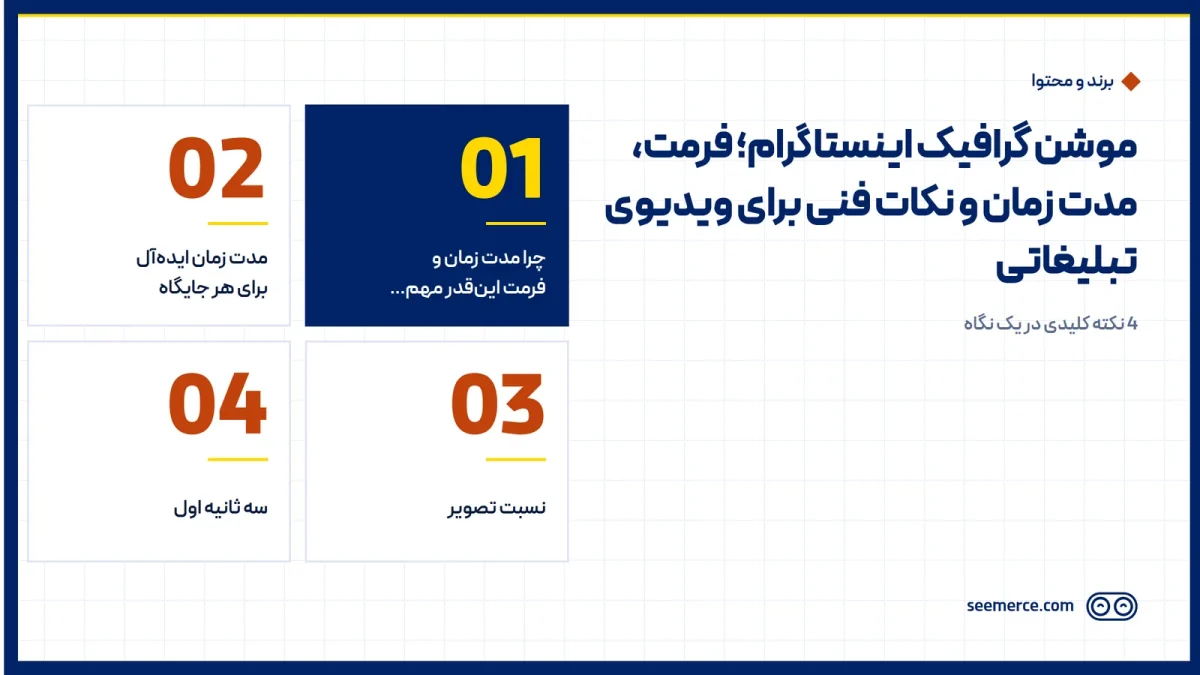
Plenty of brands produce a solid motion graphic and still get weak results on Instagram. The problem is rarely the animation itself; it's usually the wrong format, an aspect ratio that doesn't fit the placement, or a message that doesn't land in the first three seconds. These are technical details, but they're exactly what separates a video people watch from one they scroll past.
This is a practical guide, not a list of creative tips. We'll cover how long a clip should be for each Instagram placement, which aspect ratio to shoot for, why it needs to work without sound, and what to prepare before you brief an agency.
Why length and format matter this much
Algorithm behavior and viewer attention in the feed are different from Stories or Reels. An Instagram ad video built for the feed usually loses half its message when played as-is in Stories, because the frame gets cropped or it simply runs longer than the viewer's patience.
Unlike a TV commercial, social media motion graphics are designed for an environment where the viewer is scrolling fast, often watching muted, and deciding within a fraction of a second whether to keep watching or move on. That means the design has to start from these constraints, not get a general-purpose video "cut down" for Instagram afterward.
Ideal length by placement
The right length depends on where the video plays, not on how much you have to say:
- Feed post: 15 to 30 seconds. Feed viewers are a bit more patient since they already stopped to look, but drop-off climbs sharply past 30 seconds.
- Story and Reels: 6 to 15 seconds for a single, self-contained message. If you have a longer story, split it across a few consecutive Stories rather than one long clip.
- In-stream ad: respect the platform's display limits here; shorter usually performs better since the viewer didn't choose it and is watching in the middle of other content.
General rule: every extra second has to earn its place. If the message works in 10 seconds, stretching it to 20 only lowers your completion rate.
Aspect ratio: why square and vertical beat horizontal
On mobile, the screen is vertical. A horizontal (16:9) video in the feed or Stories leaves a lot of empty space and ends up displayed smaller, which makes text and visual detail harder to notice.
- 1:1 (square): works well for feed posts, fitting comfortably on both mobile and desktop feeds.
- 4:5 (tall): takes up more of the mobile feed screen and usually gets a higher stop-scroll rate.
- 9:16 (fully vertical): the standard for Stories and Reels; fills the entire screen.
If budget allows, it's worth producing a separate version for each placement from the start, rather than force-cropping one horizontal file and throwing off the composition.
The first three seconds: where the decision gets made
In the feed, a viewer decides in a split second whether to keep watching or scroll on. If the first frame is a static logo or a faint text slide, you usually lose them right there.
More importantly, that decision is usually made without sound. Most people browse Instagram muted, especially in the feed. So if your opening hook depends only on audio, say a strong spoken line, it simply doesn't exist for most viewers.
The practical fix is a clear visual move and on-screen text in those first seconds, not a logo, not a slow intro, but something that makes sense instantly even with the sound off.
Captions and on-screen text aren't optional
Since most viewing happens muted, captions or on-screen text are no longer a nice-to-add extra, they're core to how you design Reels animation for Instagram. A few practical notes:
- Repeat the core message as short on-screen text, not just through voiceover.
- Make captions large enough to read on a mobile screen at a glance.
- Avoid long sentences on a single frame; viewers need to read and move on within one to two seconds.
Safe zones: where the platform UI sits on top of your video
In Stories and Reels, reaction icons, usernames, captions, and platform buttons sit over parts of the screen, usually the top and bottom of the frame. If your text or logo lands exactly there, it gets hidden under Instagram's interface.
The fix is keeping key elements, text, logo, call to action, inside the safe central zone of the screen instead of pinning them to the top or bottom edge. This is one of the most common mistakes when a general video gets reposted to Stories unchanged.
General platform differences
Instagram motion graphics have their own rules, but if the same content is going to run on other platforms too, keep a few broad differences in mind:
- Instagram: faster pacing, punchier visual and color tone, low tolerance for a slow buildup.
- LinkedIn: a more professional audience, more focus on the work context, and generally a more formal tone than Instagram, though the muted-viewing and caption principles still apply.
- YouTube Shorts: close to Reels in format (9:16), but viewers tend to be a bit more willing to watch through, so the narrative arc can hold on a little longer.
In practice, the best results come from keeping the core message consistent while re-editing length, pacing, and even some scenes for each platform. That's exactly what we work on through our motion graphics service page: not one file for everywhere, but versions built for each placement.
How to brief an agency so the work goes smoothly
Most delays in motion graphic projects come from an incomplete brief, not the animation itself. Before you reach out to an agency, have these ready:
- Brand colors and fonts (a basic identity file is enough)
- The key message; one or two sentences that actually need to stick with the viewer
- A clear call to action (buy, call, download, visit the site)
- Reference videos, even from competitors or other brands, to show the feel and pacing you want
- The placements you need; feed, Stories, Reels, or a mix, since the design differs from the start
The more precise these are, the fewer revision rounds you'll need and the faster the work gets done. If this is part of a broader strategy, it's worth checking our digital marketing services too, so these videos fit into a larger campaign instead of running on their own.
What we don't do
Let's be honest about what an Instagram motion graphic can't guarantee, and what we deliberately don't do:
- We don't promise a video will go viral; going viral depends on a lot of factors outside of design that no agency controls.
- We don't cut captions to save time, even under a tight deadline, because they're a big part of what makes a video work.
- We don't force one file to cover every placement (feed, Stories, ads); if budget really doesn't allow separate versions, we'll tell you honestly which placement to prioritize.
- We don't give "guaranteed conversion rate" or "guaranteed views" numbers, because those depend on targeting, ad budget, and the market, not just animation quality.
Frequently asked questions
What's the best aspect ratio for Stories?
9:16, fully vertical, is the standard for Stories and Reels. A horizontal or square video in Stories usually leaves a lot of empty space in the frame and appears smaller.
Are captions really necessary?
Yes. Since most people browse Instagram muted, without captions or on-screen text the core message never reaches a large share of your audience.
How important are the first few seconds?
Very important. The decision to keep watching or scroll away is usually made in the first one to three seconds, often without sound. If those seconds aren't filled with a strong visual hook and readable text, the rest of the video never gets seen.
How long should an ad video be?
It depends on the placement; 15 to 30 seconds usually works best for the feed, and 6 to 15 seconds for Stories and Reels. There's no fixed rule, but every extra second needs to justify itself.

Comments and questions
No comments yet. If you have a question, we'd be glad to hear it.
Write a comment