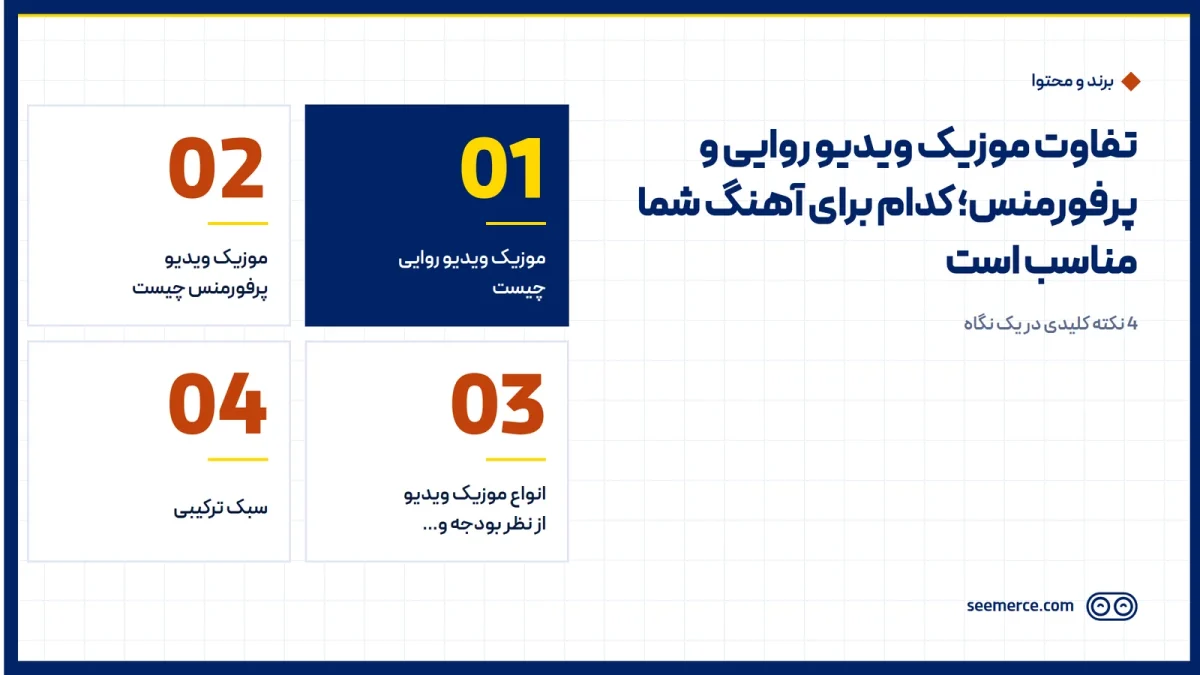
Before you book a location, cast an actor, or block out a shoot day, there's one decision that shapes everything else: is this song getting a story, or is it about the performance itself? That choice affects your budget, your timeline, and the kind of crew you need to book. A lot of music video projects run into trouble because someone skipped this question and jumped straight to shooting.
This post breaks down the difference between narrative and performance music videos, introduces the hybrid option, and gives you a short set of questions to figure out which style actually fits your song.
What a Narrative Music Video Is
A narrative music video is a short story that the song plays over. It has a main character, a conflict or event, and usually a closing image that ties back to the song's emotion. The artist might barely appear on screen, or only for a few shots — the camera is focused on a world built for the song, not necessarily on the artist's face.
This format works well for songs with a clear story in the lyrics, or an abstract, heavy feeling that lands better through imagery than through a close-up of someone lip-syncing. Emotional ballads, breakup songs, social commentary, or tracks built around a single concept are usually strong candidates for narrative treatment.
What a Performance Music Video Is
A performance music video centers on the act itself — the artist singing, dancing, or carrying the song's energy through body language and expression on camera. It might use one fixed location or several, but there's no story in the conventional sense; what you see is the artist and the track's energy, full stop.
This format usually works better for high-energy tracks, dance-driven songs, or artists with a strong personal brand. If the audience is coming to see the artist, not a story, performance is the more direct route.
Types of Music Videos: Budget and Time
One of the most practical differences between these formats is cost and production time, and it directly shapes how you plan the project.
- Performance video: usually one or two locations, a single shoot day is often enough, no supporting cast is needed, and editing moves faster since everything revolves around one subject.
- Narrative video: needs a script, likely one or more actors, multiple locations, set and wardrobe design matched to the story, and more editing time to make the storyline land.
- Hybrid: sits between the two — usually an extra shoot day or a few extra hours compared to a pure performance video, since you need both performance shots and a handful of narrative scenes.
None of these formats is inherently better than the others. The real question is what your song needs and what fits your budget.
The Hybrid Style: When You Need Both
Many successful music videos are actually a blend of narrative and performance. A thin storyline runs in the background while most of the video is still dedicated to the artist singing or dancing on camera. This works well when the song has a concept worth telling and the artist also has a strong on-camera presence that would be a waste to leave out of frame.
The key is that the blend has to be intentional. Don't stitch half a story and half a performance together just because the client wants both. Either the storyline genuinely adds something to the song, or it shouldn't be there at all.
How to Find the Right Style for Your Song
Before choosing a format, ask yourself these questions:
- Is the lyric literal or abstract? If the lyrics describe a specific event (a breakup, a journey, a decision), narrative can visualize it directly. If the lyrics are more about mood than plot, performance usually feels more natural.
- Is the artist a strong on-camera performer? If the artist has real charisma on stage and in front of a camera, it's a waste to bury that energy under a storyline. If the artist isn't comfortable being the center of attention on camera, a narrative with a separate actor can take that pressure off.
- Is there a message that needs to be seen, not just heard? If the song has something to say that audio alone doesn't fully carry, narrative is the better tool. If the goal is mainly to show off energy, style, or the artist's identity, performance gets there more directly.
- What's your budget and timeline? If time or budget is tight, starting with a performance video is the more sensible call. Save narrative for a lead single or a moment when the budget allows it.
Answering these four questions usually clears up the direction. If you're still unsure, check out the work on our music video service page and talk it through with us based on your actual song — after one listen and a read of the lyrics, we can usually tell you which format makes more sense.
Factor In the Artist's Visual Identity
The video's style shouldn't be decided in isolation from the artist's overall visual identity. Color, typography, lighting mood, even wardrobe choices in the video should line up with what people already see on the album cover, Instagram page, and other visual material. A dark, cinematic narrative video for an artist whose visual identity is bright and colorful feels disconnected, even if the video itself is well made. If you don't have a clear visual identity yet, or want to lock that foundation down before the video, it's worth starting with brand identity so the video is built on a consistent visual language.
What We Don't Do
Honestly, this decision isn't one we can make for you or your song alone, and we don't push one fixed format onto every client.
We don't force a story onto a song that doesn't need one. If the track is simple and high-energy and just needs the artist front and center, that's what we recommend, even if a narrative concept sounds more exciting on paper.
When a song genuinely has a story to tell, we don't recommend a pure performance video, because it leaves a lot of the song's potential on the table.
For a song with a tight budget or timeline, we don't pitch a complex multi-location narrative with cast; we recommend something that actually fits the project's real constraints.
And finally, we don't promise that any particular style will go viral or rack up millions of views. The right format shows the song at its best, but the final outcome depends on a lot of factors beyond the video itself, including the song and how it's marketed.
Frequently Asked Questions
Can narrative and performance be combined?
Yes, and a lot of good music videos do exactly that. The key is making sure the storyline is intentional and doesn't crowd out the performance shots, rather than gluing both formats together just to check both boxes.
Which style works better for a rap track?
It depends on the song. If the track leans on personal brand, style, and energy, performance is usually the more natural choice. But if the lyrics carry a specific story or social message, narrative or a hybrid can land that message more effectively.
Which one gets produced faster?
Performance videos are usually faster — fewer locations, a smaller crew, and simpler editing. Narrative videos take longer because of the script, casting, and multiple locations involved.
If the artist has no acting experience, can we still do a narrative video?
Yes, usually by bringing in a separate actor for the lead roles and keeping the artist for performance shots or brief appearances on screen. This takes the acting pressure off the artist while still letting the story come through.


Comments and questions
No comments yet. If you have a question, we'd be glad to hear it.
Write a comment