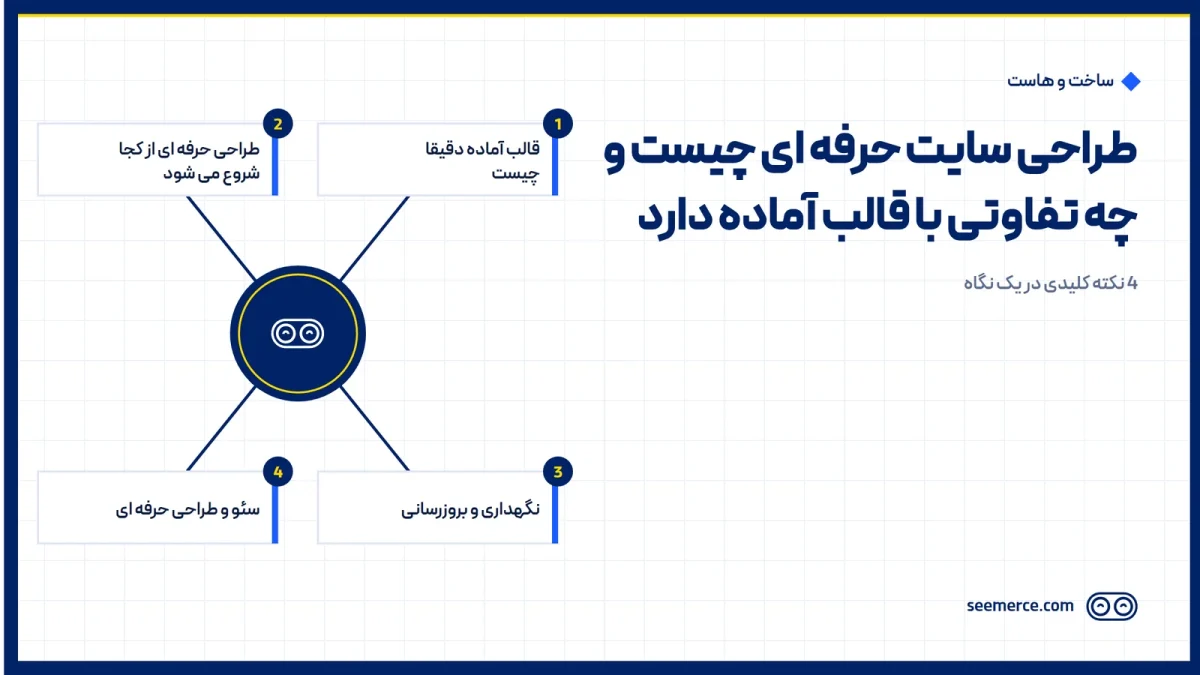
A lot of people thinking about a website for the first time get stuck between two options: buy a cheap pre-made template and swap the colors and logo themselves, or pay for proper web design. The two products look similar, but the result they produce for a business is not the same.
What a pre-made template actually is
A pre-made template is a pre-built structure that thousands of other sites have also bought. The colors, fonts, and sometimes even the default text can be changed, but the core page layout, the user's path through the site, and the logic behind the design are the same thing built for a generic, hypothetical business, not for your actual customer.
That means the template assumes every visitor thinks the same way and follows the same path. In practice, a clothing store and a law office have completely different visitor behavior; one needs to show products fast and push toward checkout, the other needs to build trust and lead to a phone call.
Where professional design actually starts
Professional web design starts with a simple question: what is the person landing on this site actually looking for, and what needs to happen for that to be profitable for you? The answer is different for every business, and that difference is what shapes the page structure, the order of sections, and even the color of the contact button.
After that, the user's path is mapped out on paper or in a design tool before a single line of code is written. There's no shortcut for this step; a pre-made template simply doesn't have this step, because it was already finished for a hypothetical user.
A few practical differences that show up in the result
- Speed: pre-made templates are usually loaded with extra code and plugins that never get used but still slow down loading.
- Uniqueness: there's a real chance your direct competitor bought the exact same template with the exact same layout.
- Fit with the goal: the buttons, forms, and purchase path aren't tuned to your business's specific goal.
- Room to grow: when a new need comes up (say, online booking), pre-made templates often don't flex enough.
Maintenance and updates: a difference that shows up after delivery
Another important difference between a pre-made template and professional design shows up in the phase after delivery. Pre-made templates are usually maintained by an outside team for thousands of different buyers; that means every template update has to stay compatible with every possible combination of plugins, which is why updates either come out late or occasionally break something on specific sites that no one is responsible for fixing right away. With custom design, the team that built it knows exactly what code was written and why, so fixing an issue or adding a new feature happens faster and with less risk.
This difference is felt most when a business enters its busiest season, say right before a sales event, and exactly then a template update messes up the site's appearance. That kind of thing happens far less often with custom design, since dependence on third-party code and logic is much more limited.
SEO and professional design
One difference that gets noticed less, but matters: clean HTML structure, acceptable load speed, and sensible internal linking between pages are all part of the SEO foundation. A pre-made template usually doesn't account for these, since it's built for generic use. If you're planning to invest in visual identity or site content later, it's better to get this foundation right from the start so every later change is easier to make.
The real cost of a "cheap" template
A lot of the time, the real cost of a pre-made template doesn't show up in its price tag. After buying it, you usually need to install a long list of plugins to shape the site the way you want, and each of those plugins carries its own cost and its own risk of breaking with future WordPress updates. On top of that, when the business owner later wants to change something specific that the template never accounted for, they usually need to hire a developer at an hourly rate to do what a custom design would have already built in from the start.
Because of that, a fair comparison between a pre-made template and custom design shouldn't stop at the upfront price; it needs to factor in the hidden costs that come later (plugins, maintenance, manual fixes). In many cases, a gap that looks large at first glance turns out to be much smaller than expected after a year of upkeep.
A practical example of a common wrong decision
A common example: a clothing store buys a generic pre-made e-commerce template built to sell anything from home appliances to books. The product category structure, the search filters, and even the button text were written for a generic store, not for the specific logic of buying clothes (say, picking size and color in one step). The result is that the user has to make a few extra clicks to reach the same simple goal, and those extra clicks are part of what makes some customers give up halfway through.
By contrast, when the purchase path is designed from the start for that specific type of product, small details like the order of picking size, color, and quantity become shorter and more natural; a difference that shows up in the sales numbers, not in how the site looks.
When a pre-made template is actually enough
To be honest, a pre-made template isn't always a bad choice. For a personal site, a temporary portfolio, or quickly testing a business idea, the cost and setup speed of a template make sense. The problem starts when a serious business tries to grow on that same generic template and expects the results of a custom design.
Questions worth asking yourself before choosing a path
Before deciding between a pre-made template and custom design, a few simple questions can clarify the direction. First, what role is the site supposed to play in your business: is it just an online business card, or is it meant to be the main source of customers and sales? The bigger the site's role, the more the investment in proper design justifies itself.
The second question is what kind of site your main competitors have; if all of them are using similar generic templates, even a modest but custom design can create a noticeable difference. The third question is your business's time horizon: if there's a plan for fast growth over the next year or two, it's better to invest early in infrastructure that can absorb that growth without needing to replace the whole site later.
What this doesn't cover
We don't claim custom design is necessary for every business at every stage. If budget is tight or the business model isn't settled yet, starting with a simple template and moving to custom design later is often the more sensible path. We also don't promise that a redesign alone will automatically boost sales; design is one part of the path, not the whole path.
Frequently asked questions
How much longer does custom design take compared to a template?
Because it includes a needs-analysis and user-path design stage, it usually takes a few weeks longer than installing a ready template; in return, it doesn't need constant fixing after delivery.
Can a pre-made template be made more professional later?
To some extent, yes, by trimming extra sections and reorganizing content; but the template's underlying structure stays the same, unlike a from-scratch design that's shaped entirely around your goal.
Is custom design worth it for a small business?
It depends on the goal; if the site is meant to be the main channel for bringing in customers, investing in proper design usually pays off in the medium term.
Does professional design always mean custom-coded from scratch?
Not necessarily; many company sites are built on WordPress but with a custom design and structure, not by installing a generic template.

Comments and questions
No comments yet. If you have a question, we'd be glad to hear it.
Write a comment